
Smarter Bed And Breakfast
Lodging For Smart Shoppers
A Lodging Experience That Balances Affordability, Safety, Comfort and Convenience For Los Angeles Travelers.
Hospitality Service | Service Design
Introduction
Los Angeles travelers struggle to find lodging that balances affordability, safety, comfort and convenience.Los Angeles is one of the most expensive cities in the United States. Travelers to the city often search for lodging that is affordable for them but also also makes them feel safe and offers a sense of quality and privacy. However, finding a place that balances this desired affordability, safety, cost and convenience can prove to be a difficult task. And even when travelers do find a property with these features, the guest experience from check-in to check-out can many times feel fragmented and inconsistent.Wanting to capitalize on this market opportunity, Smarter Bed And Breakfast choose to redesign their current lodging experience to better meet the needs of Los Angeles travelers and brought me on as a Service Designer to lead these efforts.
Defining The Service Goals
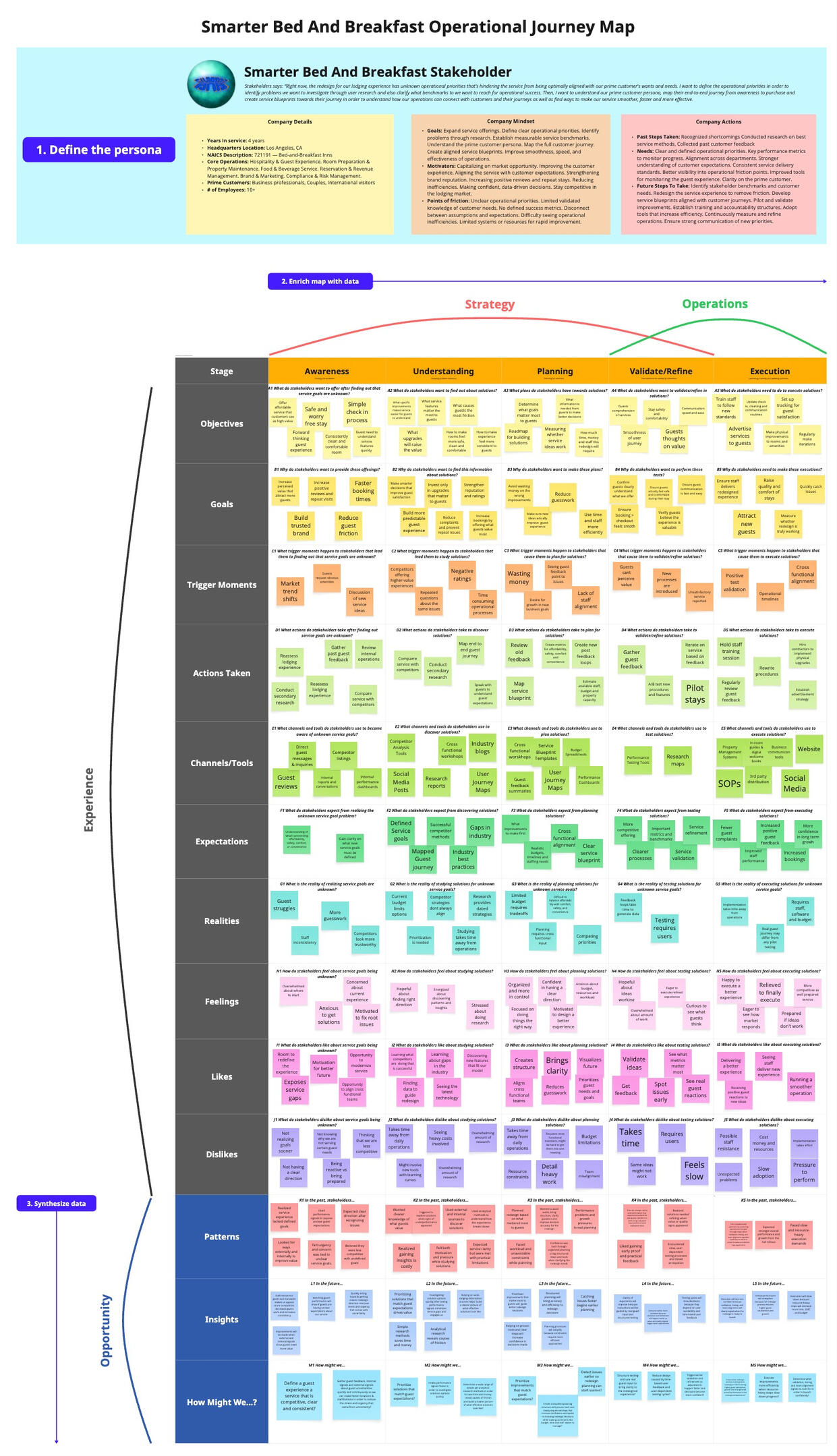
Goal: I started the project by giving definition to the service goals Smarter Bed And Breakfast stakeholders wanted to achieve. This would ensure that once I started researching users, I would obtain the data that stakeholders were specifically looking for in order to develop a fitting service experience.Methods Used:Operational Journey Map
I developed an operational journey map where the stakeholder journey was: Becoming aware of problems > Understanding the solutions > Planning > Testing > Execution in order to identify problems stakeholders wanted to investigate through user research and also clarify what benchmarks to they want to reach for operational success. I then interviewed stakeholders across different departments of the company in order to obtain research data that would fill this map across stakeholder objectives, goals, trigger moments, etc.Outcome: Synthesizing the data in this map revealed patterns, insights and problem statements user research will need to gather data for. The problem statements user research needed to solve were:
How might we define a guest experience a service that is competitive, clear and consistent?
How might we prioritize solutions that match guest expectations?
How might we determine a wide range of simple yet analytical research methods in order to save time and money, reveal causes of friction and build a clearer picture of what effective solutions look like?
How might we create a simplified planning structure with proven tools and clearly sequenced steps that increase confidence and speed in choosing redesign decisions while making constraints like budget, time and staff easier to manage?
How might we gather necessary guest feedback, internal performance signals and external performance signals about guest uncertainties earlier, quickly and continuously so we can accelerate planning, validation and refinement in order to reduce the stress and urgency that come from uncertainty?
How might we reduce delays caused by time used in collecting user feedback and user-dependent testing cycles?
How might we structure & trigger earlier validation and refinement using real guest input so adjustments happen faster and decisions become more clear and confident?
How might we ensure that the redesign process is being done carefully and efficiently in order to bring higher guest satisfaction, growth and strength to the overall performance though resource-heavy steps slows down progress?
How might we determine what validation, timing and team alignment signals to look for in order to launch confidently?
Analyzing The Guest Journey
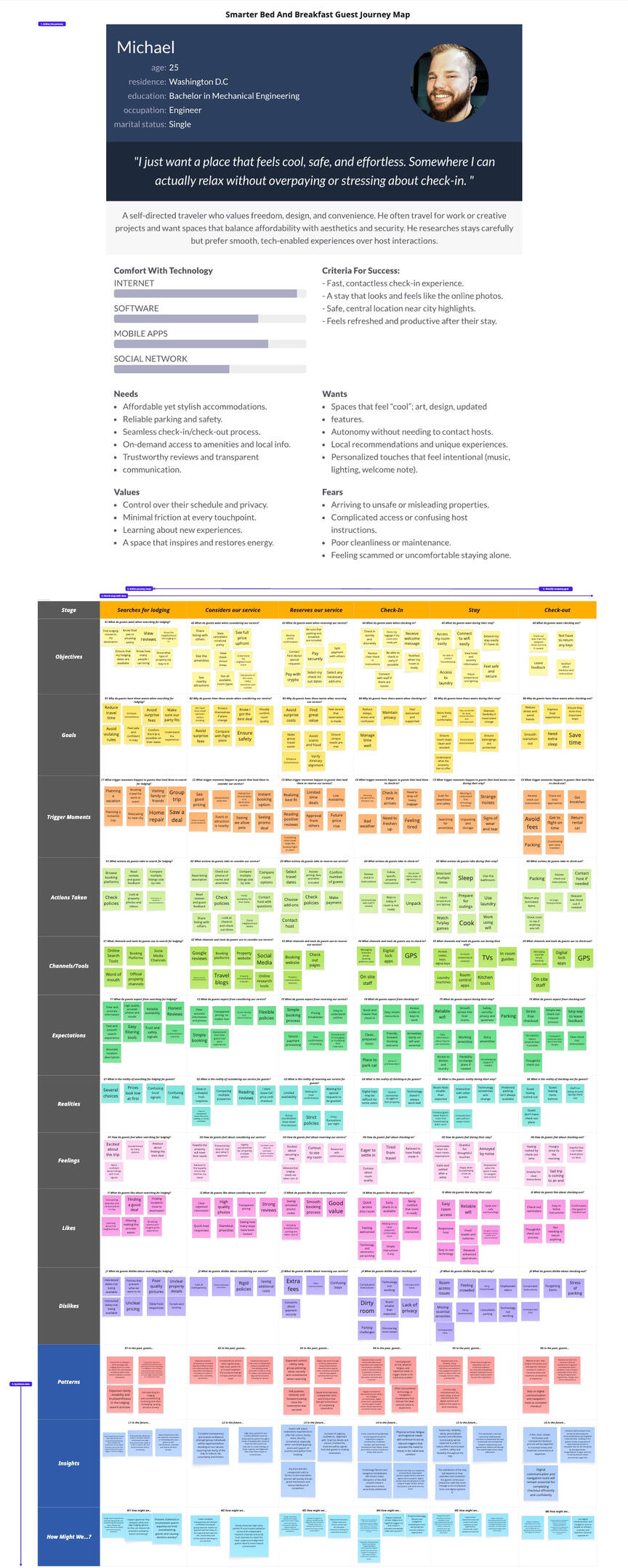
Goal: I had a deep understanding of the operational priorities the company wanted to achieve. I know needed data from users discussing their customer journeys in order to fuel the planning and designing of a new service with real data; giving it a better ability to reach company goals.Methods Used:Guest Journey Mapping
I developed a guest journey map where the guest journey was: Searches for lodging > Considers our service > Reserves our service > Check-in > Stay > Check-out. I then conducted a wide range of simple yet analytical research methods such as secondary research, competitive analysis, user interviews and ethnographic research in order to obtain research data that would fill this map across guest objectives, goals, trigger moments, etc.Outcome: Synthesizing the data in this map revealed patterns, insights and problem statements that served as opportunities to embark on for solutions. The carved out problem statements that would be investigated through user research were:
How might we design a search experience that feel inspirational and empowering while staying clear, reliable and trustworthy across digital and social discovery channels?
How might we support guests as they compare, verify and align lodging options so they can reduce risk and build confidence before committing?
How might we prevent cluttered or inconsistent search experiences from overwhelming guests and causing decision anxiety?
How might we create complete transparency and shared confidence among all group decision-makers so guests have full clarity of the stay and feel reduced risk, uncertainty and friction before deciding on our service?
How might we clearly showcase high value, perfect fit and trusted validation across both independent research channels and social trust channels to create the hope, urgency and alignment guests need to move toward commitment?
How might we design a reservation experience that give guests full control, clarity, value, security and convenience while also supporting group coordination and positive anticipation?
How might we amplify the signals of urgency, confidence and alignment with trip details through secure and trustworthy channels so guests feel ready to make a reservation?
How might we remove time barriers, hidden costs and friction points that disrupt guest momentum during the reservation process?
How might we design an check-in experience that is fast, smooth and predictable in order to support convenience, readiness, comfort and low-friction interactions that reduce stress and create a sense of welcome, clarity and control?
How might we prevent technology failures and navigation breakdowns from disrupting the smooth check-in experience?
How might we streamline the step-based check-in process by integrating digital communication, digital access tools and on-site support to help guests gain access, follow instructions and settle in easily?
How might we design the stay to maximize autonomy, reliability, clarity, personalized touches and effortless functionality so comfort, safety and flexibility naturally increase while effort decreases?
How might we improve first-impression cues and ensure functional readiness so that expectations consistently match operational realities?
How might we make guest's continuous interaction with the room across both physical tools and digital systems more seamless, consistent and satisfying throughout the entire stay?
How might we design a checkout experience that is fast, clear, simple, friction-less and transparent so departure feels low-stress and highly convenient?
How might we support guests by reducing the impact of time pressure, deadlines and logistical commitments so that disorganization, forgetfulness, hunger and lack of staff presence do not disrupt their task-oriented departure process?
How might we use digital communication and navigation tools to enable an efficient, confident and seamless checkout experience?
Planning Solutions Through Collaboration
Goal: The goal of this stage was to develop and prioritize solutions within a service plan in a way that could balance desirability, feasibility and viability of our concepts and bridge the gap between user needs with operational desires and realities.Methods Used:
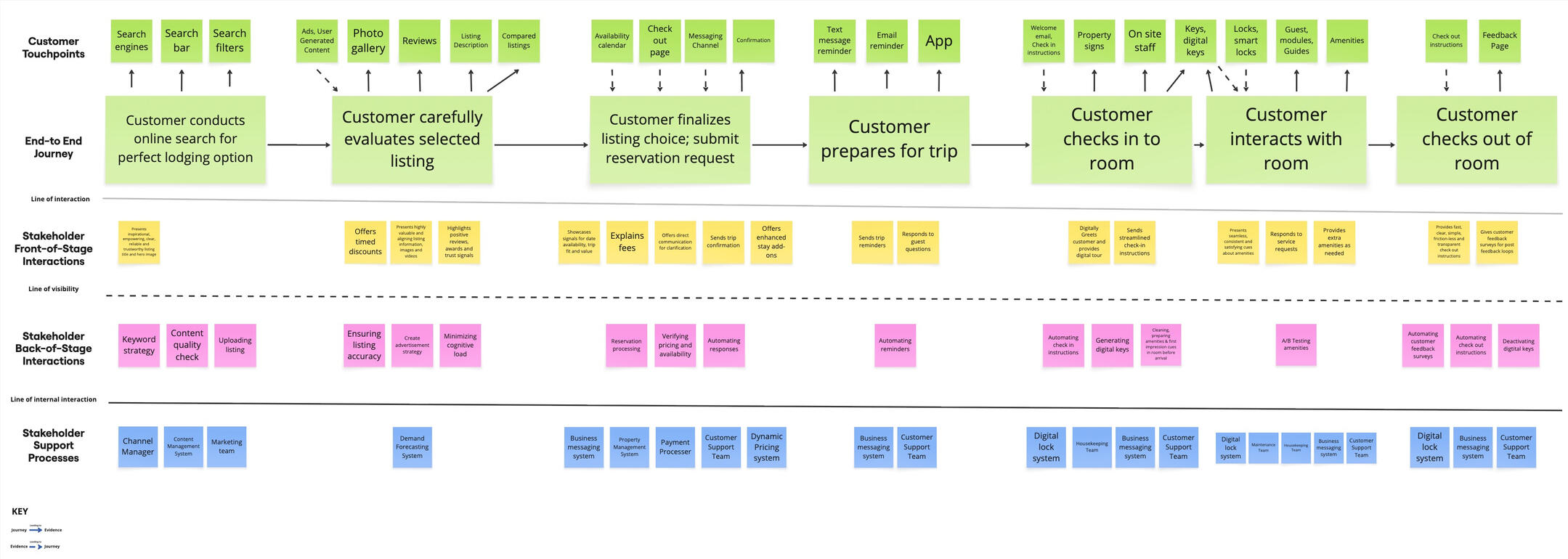
Service Blueprinting
I developed a service blueprint where the blueprint across the customer's journey: Searches for lodging > Considers our service > Reserves our service > Pre-arrival > Check-in > Stay > Check-out. I then conducted a wide range planning methods such as cross functional brainstorming workshops workshops and feasibility studies in order to obtain research data that would fill this map across guest objectives, goals, trigger moments, etc.Outcome: Synthesizing the data in this map revealed front stage interactions, back stage interaction and support processes that align with guest needs and stakeholder service goals.
Testing & Execution
Goal: With the service blueprint in hand, the goal of this stage test the experience for validation and refinement of concepts. This prepared the way for the execution of the service experience.Methods Used:A/B Testing
Over time, I ran A/B tests on layouts, calls to action, copy and amenity configurations across key flows, measuring completion time, error rate and satisfaction to select the top performer. Evidence-based choices prevented rework and ensured the chosen style and amenity mix resonated with the target audience.Post Feedback Loops
I conducted customer satisfaction surveys as post feedback loops with guests for ongoing validation of desirability and receive feedback for service iteration.
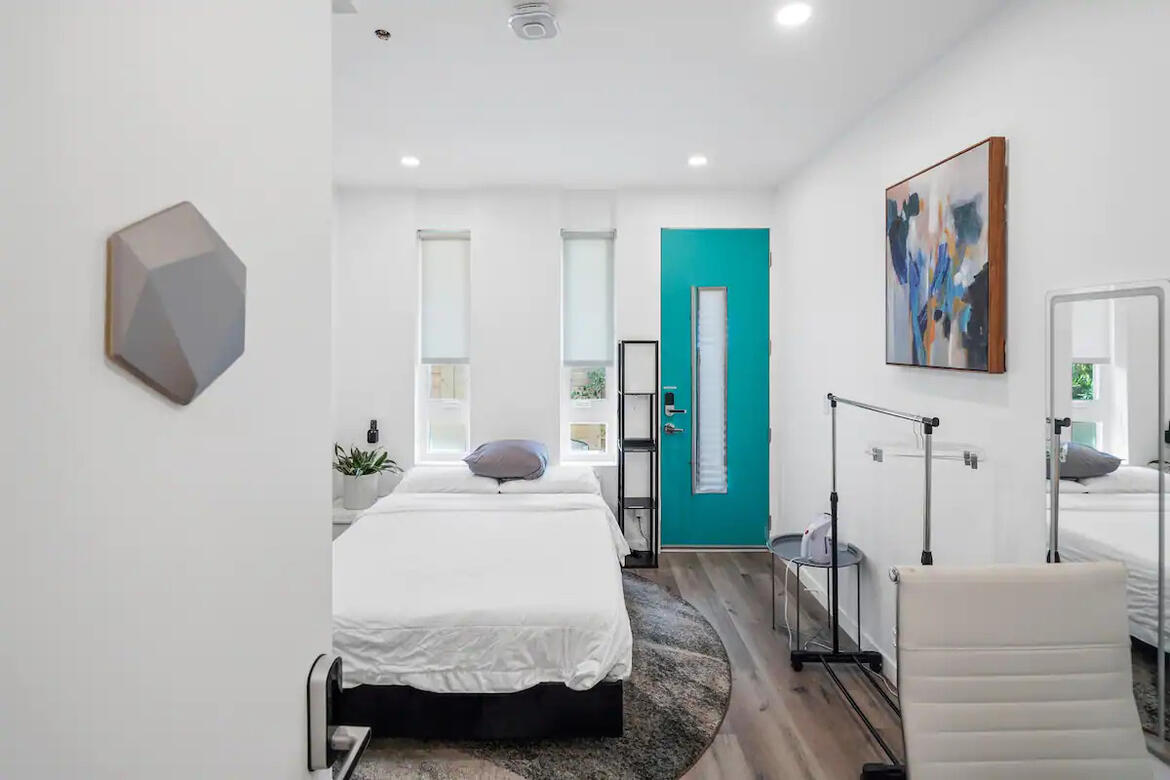
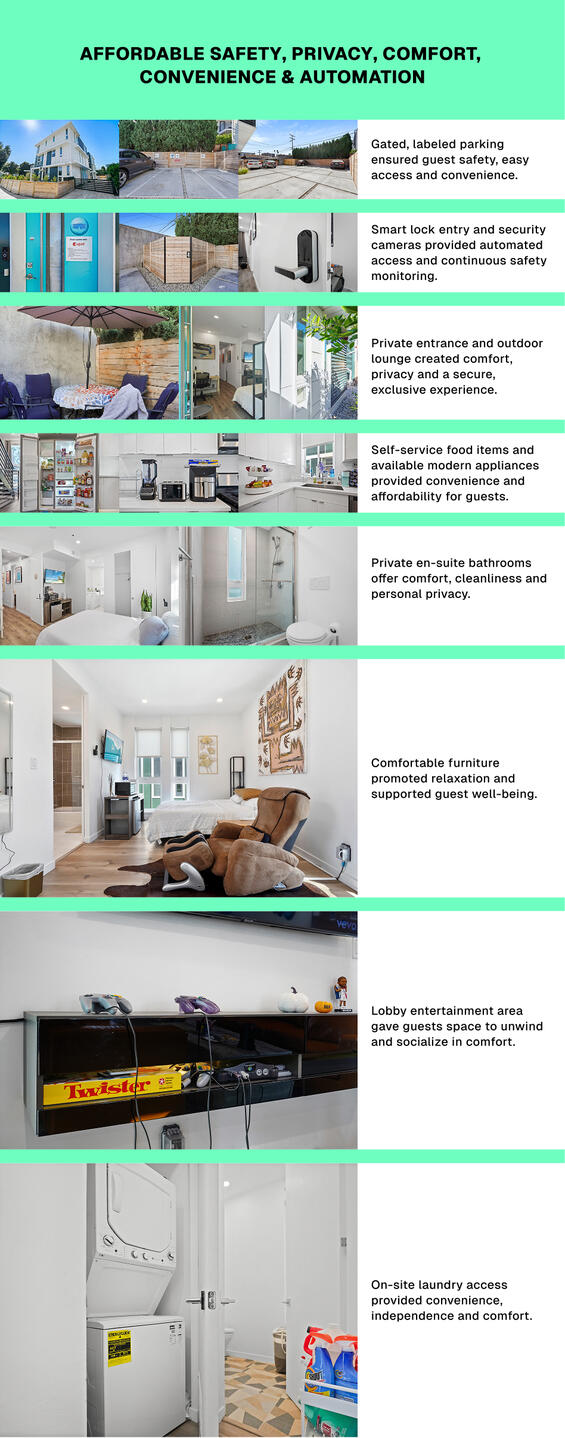
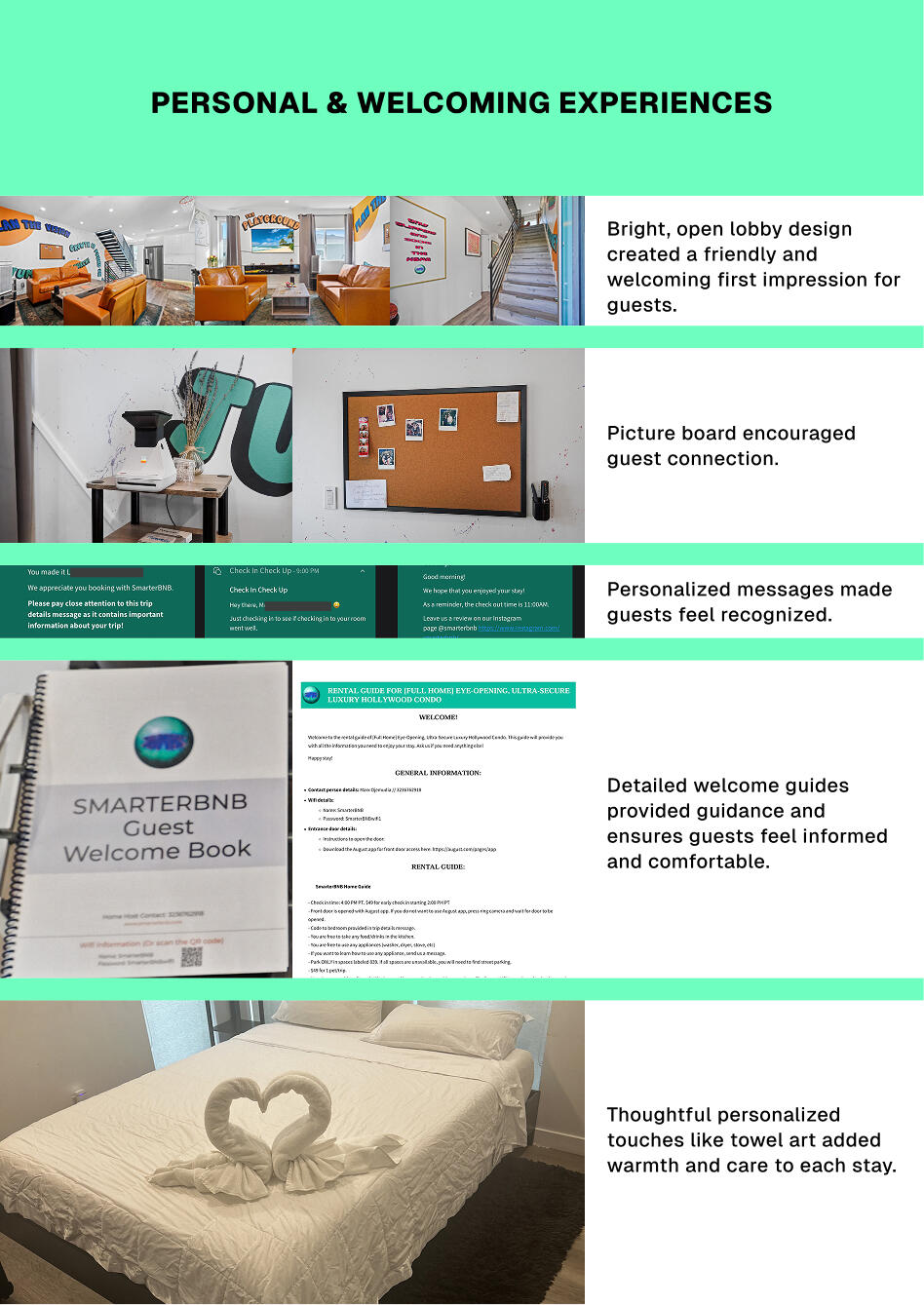
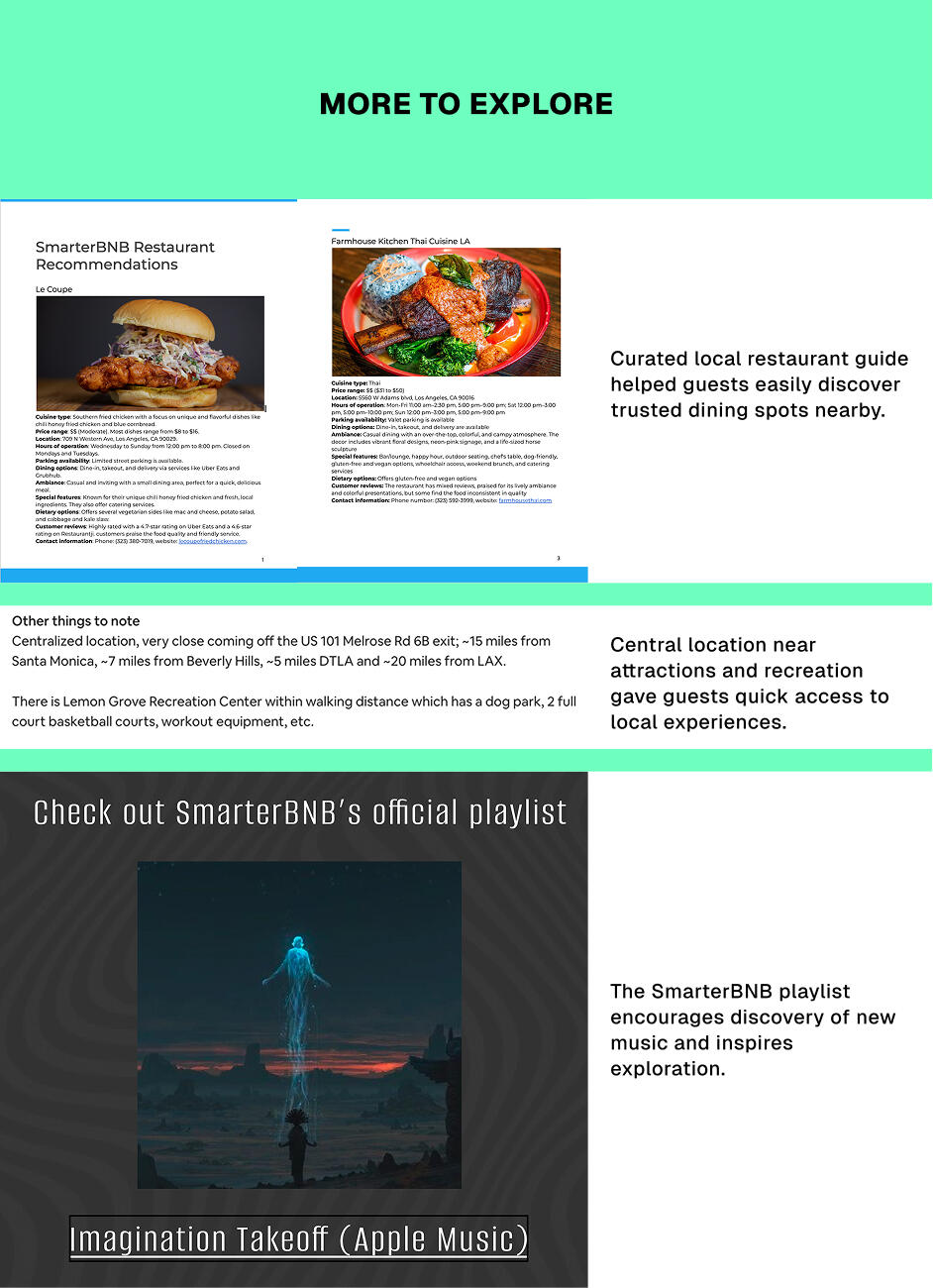
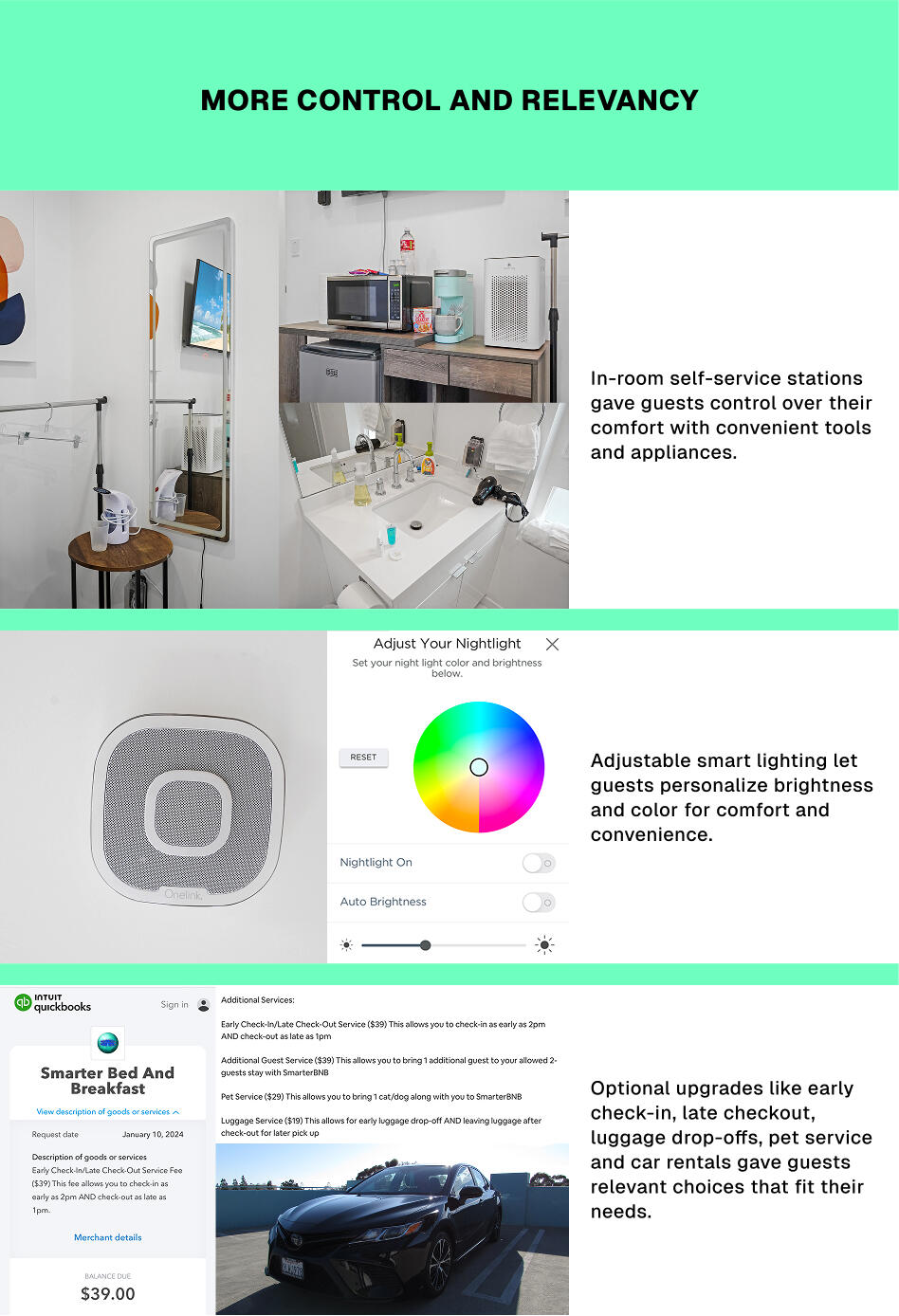
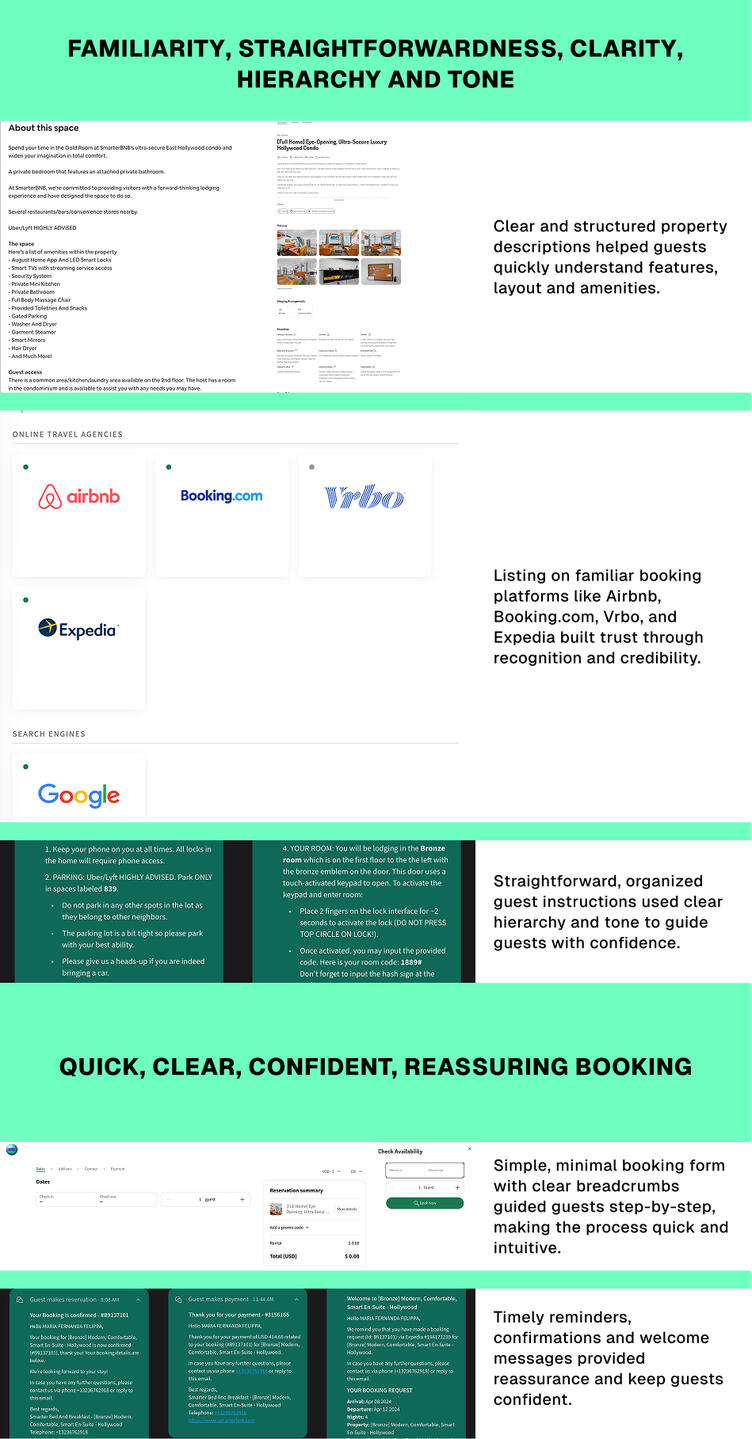
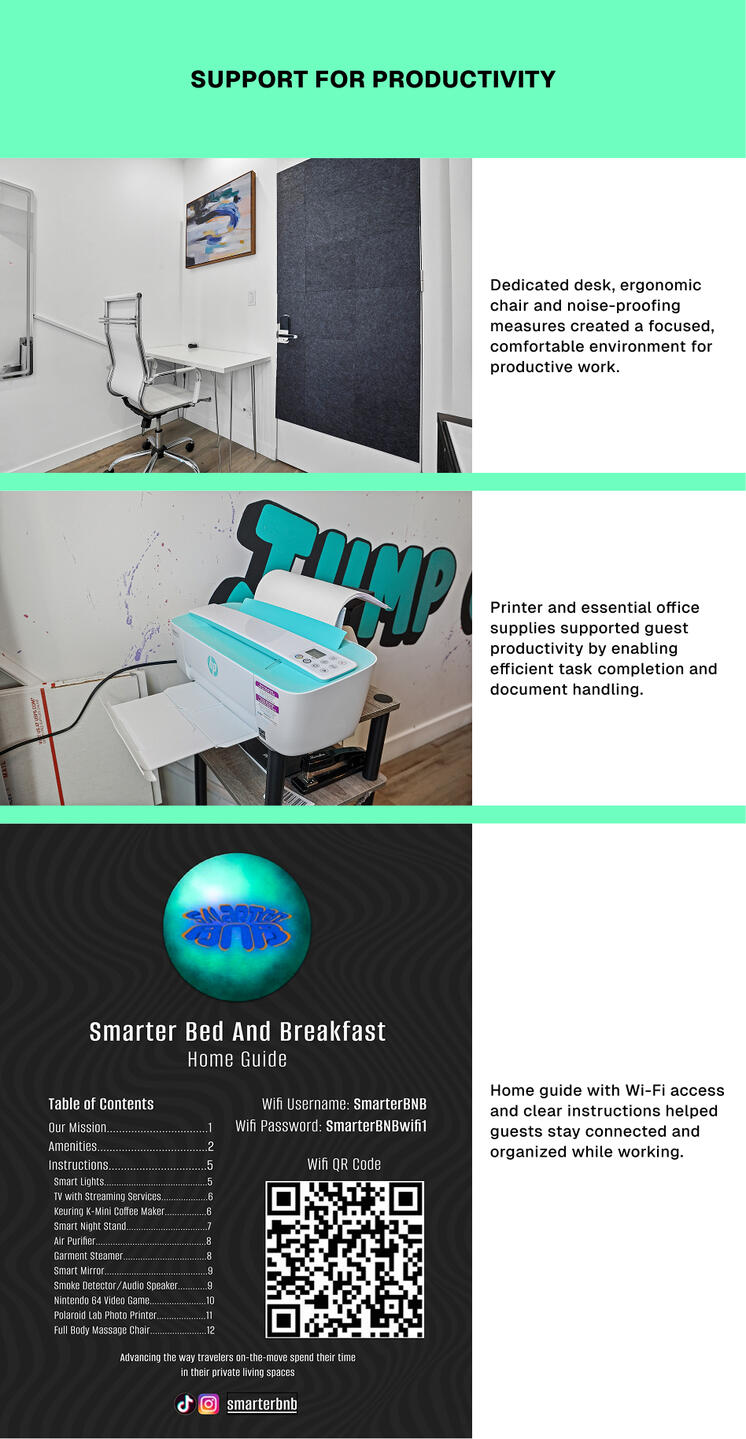
Outcome: With a tested set of guest and operational solutions, I was able to validate and refine concepts for a more competitive, clear and consistent guest experience. The following shows images of some of the solutions that were implemented and why:
Reflections
This project proved how purposeful service design can create an autonomous lodging experience. Over a four-year period, the combination of digital modules, AI-enabled workflows, and physical service enhancements delivered measurable results. These are some of the accomplishments we were able to achieve:- Introduced simplified digital guest modules and a contactless check-in system reducing on boarding time by 50% compared to industry averages.- Maintained rates that were 23% lower than Los Angeles lodging averages.- Embedded AI-driven demand forecasting and dynamic pricing optimization increasing peak-season revenue by 25% compared to the regular-season revenue.- Designed tiered room models and bundled cross-sell services boosting total sales by 22% compared to the pre implementation baseline.- Sustained ~90% occupancy.- Served more than 5,000 guests.- Generated 500+ five-star reviews.- Delivered ~$1M in booking sales.- Contributed to a business valuation of $2.3M.Throughout the process of building the experience, we encountered several unexpected feasibility challenges such as zoning requirements and shipping regulations that impacted operational planning. These moments taught me that ambitious ideas often come with hidden constraints. This truth applies not only to physical environments but also to digital products, where scalability and compliance can present equally complex realities.However, these results highlight how service design can align guest needs with operational strategy to transform a lodging concept into a scalable, high-performing business model.